
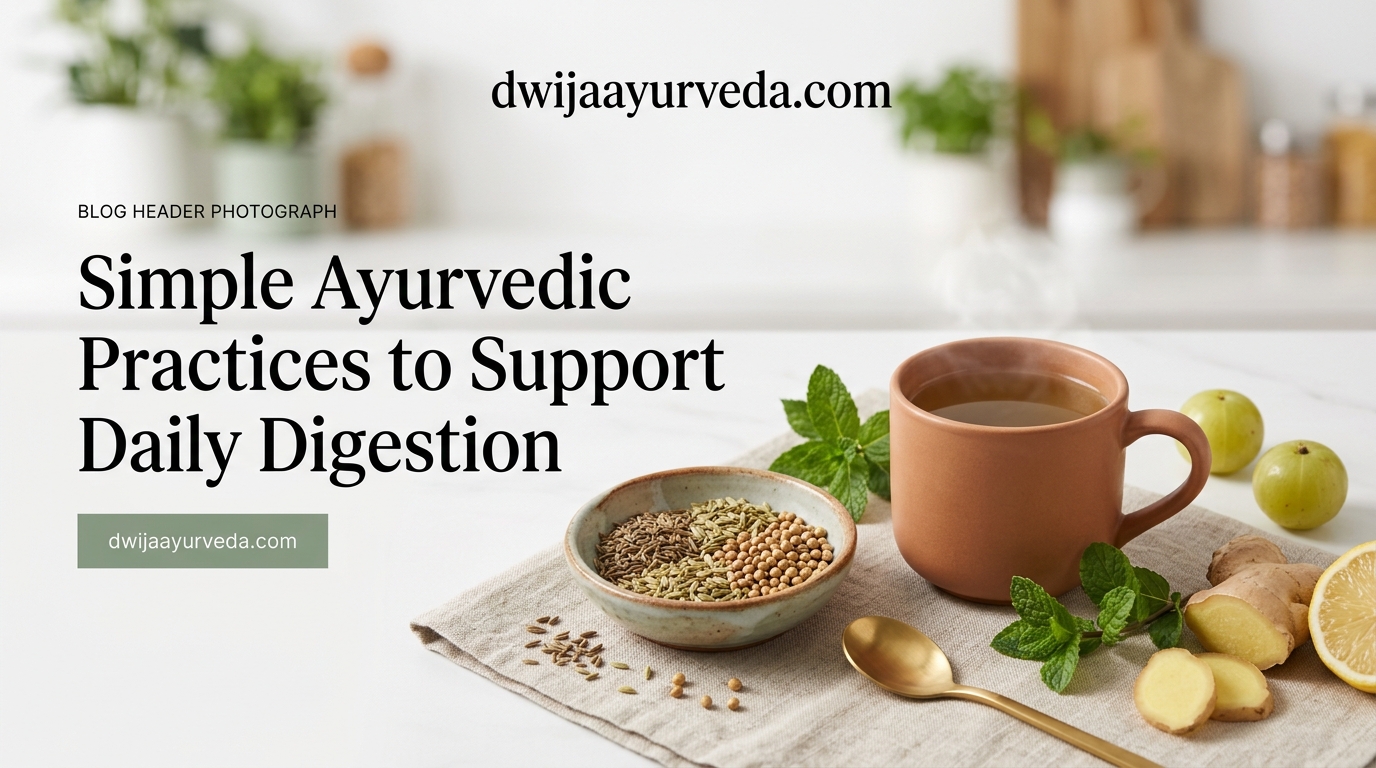
In Ayurvedic philosophy, optimal health begins with a strong digestive fire, known as Agni. When Agni is balanced, the body efficiently absorbs nutrients and eliminates waste, promoting overall vitality and clarity. However, modern fast-paced routines often interrupt this natural process through hurried meals and irregular schedules.
1. Enjoy Warm, Freshly Prepared Foods
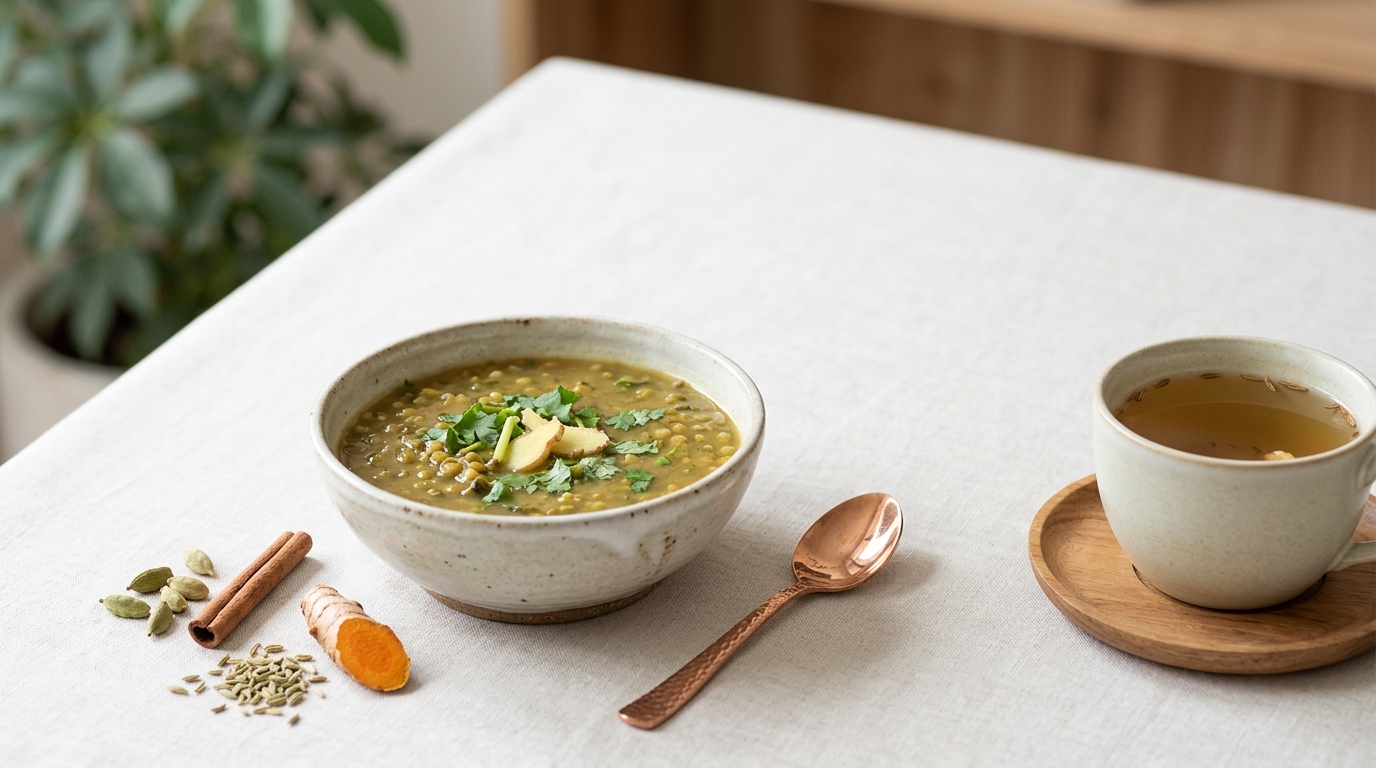
Ayurveda suggests that warm, cooked foods are generally easier for the body to process compared to cold, raw, or heavily processed meals. Incorporating freshly prepared soups, cooked grains, and steamed vegetables helps preserve digestive energy and supports smooth assimilation.
2. Practice Mindful Eating
How you eat is just as important as what you eat. To support your digestive process:
- Minimize distractions: Turn off screens and focus fully on your meal.
- Chew thoroughly: Chewing initiates the essential first stage of digestion.
- Listen to hunger cues: Eat when genuinely hungry and stop when comfortably satisfied.
3. Use Gentle Kitchen Spices
Common culinary herbs play a significant role in Ayurvedic wellness. Adding mild spices to your daily cooking can gently stimulate digestion without causing irritation:
- Ginger: A small slice of fresh ginger before meals can help spark digestion.
- Cumin and Fennel: Brewing cumin, coriander, and fennel seeds into a warm tea helps soothe the digestive tract after eating.
4. Maintain Regular Meal Timings
Consistency is key in traditional daily routines (Dinacharya). Eating your main meals at similar times each day establishes a predictable rhythm for your body, helping digestive enzymes function more efficiently.
Adopting these gentle daily practices can help foster a balanced approach to digestion and holistic well-being. For specific health concerns, always consult a qualified healthcare professional or certified practitioner.








 DWIJA AYURVEDA AND PANCHAKARMA HOSPITAL